
What is the best Qigong to practice?
Another one of those questions that came in one that can’t be answered very quickly but I’ll do my best. The question was basically “What is the best Qigong to practice?”, whether you should focus all of your practice the Qigong that you’re currently learning or should you practice all of the Qigong you know? It’s not an easy question to answer. If I had to practice all of my Qigong, all of the Qigong I have learned every day, I would probably be practicing 10 or 12 hours a day.
I’ll start my answer by going off at a complete tangent. Last night I was teaching the martial side of Taiji, teaching Neijia. After we had finished practicing the Taiji form, I asked the students to pick one part of the form, one posture, for us to work on. The work we would be doing would be looking at how this move, how this part of the Taiji form could be used in application for self defence. The posture that was picked was The Apparent Close Up.
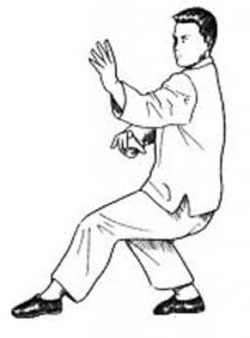
We went through the movement a few times and then I explained the most overt, the clearest, of the applications. From there we continued to delve deeper into the move and I showed that the application, the movement we were using, in that particular posture can be done not just on the horizontal plane as it is in that posture but could be done in any plane.
After about an hour’s practice we had diverged away from the original move but continued using the same methods the same basic principles. What I was trying to show by picking one part of the Taiji form was that every single move, every single application, is governed by the same principles and if you stick to the principles in any movement you are doing Taiji.
What is the best Qigong to practice? – Method over form
How does this translate to Qigong? I first started learning Qigong in the mid 1980s. I was taught the physical movements with not a lot of Qi. It was later while being taught by Master Joseph Bell that I started to understand what Qigong was. Master Bell was more interested in teaching me what Qigong actually is than he was in teaching me forms. He said you can learn forms anywhere and not understand them. Learn the physical and never touch on the Qi, never actually practice Qigong. He wanted me to understand, to experience what Qigong actually was, what the Internal movements actually felt like. Often he would project the Qi, the particular quality of Qi, that he wanted me to experience.
My tuition started with us just talking. It seemed that all we did was talk but that was not the case, there was always a transfer of Qi and experience. He asked questions. I answered. He listened. He asked about my experiences in the periods between the sessions I had with him. Not my Qigong experience, my life experience, what I had dreamt, how I felt, getting feedback from me.
He then wanted to know what Qigong had done. He asked me to perform some of the Qigong I knew. He asked me what I felt when I was doing those Qigong. He asked me what I thought about the Qigong, how it made me feel as a person as a human being. It was then that he started to explain not verbally but experientially started to explain and let me feel. Let me start to feel that Qi flowing during these exercises. The way I should have been feeling it all along.
He would give me pointers. He would ask me questions to stimulate progress. What do you feel now? Answer yourself, not me. Don’t try to verbalise it. This is the way I teach, exactly the same way. Not because it’s the only way I know, because it isn’t. It’s because it is the most efficient, the fastest the best way to learn Qigong. It is the best way to understand the Internal is to take time to listen to it. To experience it.
What is the best Qigong to practice? – Personal practice
OK back to the original question of what is the best Qigong. Should you practice the exercises that you’re currently learning and ignore the rest? The answer is no. Should you continue to practice the others? The answer is yes. But you are practicing them to remember the sequence of the movements. You are practicing them, initially, for the muscle memory. By practicing the new Qigong, that is new to you, and starting to listen more to the Qi movement during those exercises you are also building your listening skill for all the other Qigong exercises.
To practice Qigong, you must stick to the principles, stick to the methods The Yi guiding the Qi. The Shen listening to the Qi. This is the same in all Qigong for it to be truly Qigong. It’s just the same as the Taiji that I was talking about this. The same principles apply through all the movements. If you use these principles if you guide and listen you will start to understand what is moving in Qigong.
There may be exercises that you have learned elsewhere that could be loosely described as qigong and been taught as physical exercises. By understanding what Qigong actually is you will start to understand where the Qi is moving. You will also understand where it isn’t moving. You will realize whether or not you are practicing correctly. Whether or not you are accessing the meridians and the points that these or any Qigong is meant to be accessing.
What is the best Qigong to practice? – Choices
Meridian Qigong, the Qigong that is used to promote health, is there to promote healthy flow of the Qi in all 12 meridians. Any set of Qigong that is using the 12 meridians is all you need to know. One set is all that is needed. However, some sets, some exercises within sets, are more efficient at moving the Qi. Some exercises are more pleasing and less strenuous to do. The choice is yours. This means that you can cherry pick .
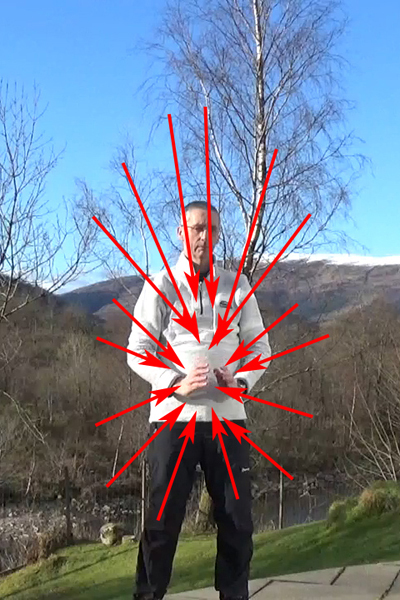
An example of this is that, if your Qi is in balance (or close to balance) the best Qigong for you may be a Five Element regime, you can pick an individual Five Elements exercise to practice, like Connecting Heaven and Earth, or The Sun and The Moon, or Change the Sinews.
If you wish to pick five exercises from a particular set, five or six exercises to cover all Five Elements, then the best Qigong set to practice may be the Five Taoist Yin.
But you can also take an exercise from five or six different sets, completely different sets of Qigong. In this case, the best Qigong is a mixture of one that works with Primary Fire, one that works with Secondary Fire and so on until you work your way through the Five Elements.
When asking yourself “What is the best Qigong to practice?” you must always remember that the best Qigong for you is a very personal choice that can be made because of the overall feeling of wellbeing received. It could be that you are targeting a particular imbalance. It could be that you wish to know, experience and compare a number of different Qigong sets.
What is the best Qigong to practice? – Using the Five Elements
The sequence that you practice any Five Elements regime has a big impact on the outcomes. You can practice using the Nurturing (Sheng) Cycle, using the Controlling (Ko) cycle, or using a random pattern. I you know where an imbalance lies (ie. what meridians are involved), what the imbalance is, whether it is chronic or fresh, then the using the Five Elements Theory makes things more efficient.
What is the best Qigong to practice? – True Qigong
The art of Qigong began with the physical and moved to the Internal. Those learning the art follow the same pattern………..external until the movements are totally natural……….. Then Internal when the external starts to disappear into the background.