
The Tao of Qigong
Firstly I would like to quote an old Glaswegian saying “It’s aw in the way ye haud yir mooth” (It is all in the way you hold your mouth). This sums up perfectly what I think is the most fundamental rule for practicing Qigong…….. SMILE AND BE HAPPY! The smile should originate in the Dantien (lower abdomen). It should radiate, like a shining light, through your whole being.
Most people look at the external movements involved and automatically think that this is “Qigong” when in fact it is really only one of the tools used in the process of learning Qigong.
When commencing on your individual Qigong journey, the physical practice of the exercises is extremely important in that it helps you find your physical boundaries and restrictions. It also assists you in calming the mind and relaxing the muscles in order for the skeletal structure to realign itself. In turn, this allows more freedom of physical movement. Further down the road the repeated practice of the physical movements has a bigger role to play. This is when the body has started to let go and accept this relaxation. It is only then that you have the opportunity to experience (the word “feel” is not enough to define this) and understand the underlying principles which govern Qigong.
If these principles are explained, by your teacher, and explored by you at an early stage in your Qigong practice it will help you build the foundations for deeper experience.
When we talk of the San Bao we are referring to the Three Treasures of Qi, Jing and Shen (Body, Mind and Spirit). Each of these has its own Tao, or way (principles). Starting with the most base, the physical, I shall try to explain.
The Tao of Qigong requires the Tao of the body
If you already practice Qigong, you will probably be familiar with the Taiji symbol (also known as the Yin/Yang symbol). Where there is one, so there must also be its opposite…up/down, hot/cold, hard/soft, straight/round, etc. Well within the mechanics of the body this dynamic balance is manifest in many ways. Let’s look at the two major physical cycles first.

The Yang Cycle
The two legs are as one, balanced and connected. They work in harmony.
Feet: The feet are your connection with the earth, they are your roots (through Kidney 1, the Bubbling Spring). Relax the feet so that they spread like flippers, they must be able to mould themselves to the ground.
Ankles: The ankles must be relaxed and loose to enable the sinking of the Qi and for the Qi to rise up evenly through the feet to the legs. Also for the weight to be rooted evenly through the feet and into the earth.
Knees: The knees are like the suspension of a car, they are both springs and shock absorbers. They are part of the link between the feet and the upper body and must be free to allow efficient Qi flow. The knees should point in the same direction as the toes to avoid instability and strains.
Thighs: With both knees slightly bent, the thighs should be rounded out. This is achieved by opening the Hip Kua. Having a stance where the legs are straight, or angular, looking like an inverted V is a sign of rigidity and, therefore, instability.
Lower Back: The lower back and the sacrum should be flat and vertical (achieved through relaxation) so that there is a tangible feeling of continuity between the legs and spine.
Movement and using the Hip Kua
Natural Step: If the step is natural, the legs should be separate (hip to shoulder width) so that the Yang cycle can be felt and appreciated. Awareness of which leg is emptying – Yang becoming Yin, and which leg is receiving – Yin becoming Yang. The transition from one leg to the other should be felt like fluid being syphoned from one leg to the other. This is the dynamic between the substantial and the insubstantial.
Single Weighted: Do not fall into your step, do not over-stretch. The correct way of judging the proper length of step is to step out as far as you can, while maintaining shoulder width between the ankles, placing the heel down without overbalancing, or falling into the step.
The Spine
This is the connection between the Yang and the Yin cycles.
Lower Back: As already stated, this should be vertical. The spine should feel as though it was being gently stretched as you use the visualisation of the head being suspended through the crown (Du Mai 20) to the heavens, and the coccyx being pulled down to the root.
Hips and Torso Aligned: In many Qigong, the entire torso should move as one co-ordinated unit with the nose and the navel in line. This is when the term “Turning the waist” is used. The body should not twist as this stops the efficient transfer of Qi from the legs to the arms – from the Yang cycle to the Yin cycle. This is achieved through the proper use of the Hip Kua.
When the term “Twisting the waist” is used it directs you to turn the shoulders more than the hips, or even with the hips stationary as the shoulders turn.
The spine connects the wheel of the pelvic girdle (Yang cycle) to the wheel of the shoulder girdle (Yin cycle).
Yin Cycle
The two arms are balanced and connected to the body, influenced by any dynamic movement from the legs (as in the exercise “Knocking at the Gates of Vitality”) and giving shape and meaning to each Qigong posture.
Shoulders: Should be relaxed so that all tension dissipates with a feeling like melting so that the movement, and Qi, can come up to the arms. There should be the feeling of space under the armpits but this should not be exaggerated through the use of muscle tension. This releases tension in the spine particularly of the “Big Bone” which is the meeting point of four meridians (GV, BL, GB, ST), and allows for freer flow of Qi along these. The back is open and the chest is concave.
Elbows: The elbows should be regarded as the heaviest points in the arms and are therefore sunk and hanging down. If the elbows are sunk then the shoulders are relaxed. The feel, energetically, is that the weight/Qi is on the underside of the arms. The arms should have a gentle curve rather than the elbows looking angular.
Hands: The angle of the hands should follow the line of the forearms and the wrists (Wrist Kua) should be open and loose. This is so that there is freedom of movement of the Qi from the root (Kidney 1) right through to the fingertips. The arms are never fully straightened. This angle can be adjusted during Qigong in order to access particular points.
Body as One Unit
When all of these principles are adhered to, the body will be one unit and in harmony, and each of the Qigong postures will feel as one unit, as one sensation.
Yin within Yang and Yang within Yin
As explained there are two cycles, the Yin and the Yang. However, as in the Taiji symbol, there is Yin within Yang and Yang within Yin. Indeed there is also Yin within Yin and Yang within Yang – we are using Yin and Yang to describe our perception of the individual components that make the whole. These two states only have existence through their relationship, each dependant on the other.
This can be seen within Qigong. An easy example to observe is “Pushing to the Diagonals”, from the Taiji Shibashi, where within the Yang cycle there is a Yin leg and a Yang leg, and within the Yin cycle there is a Yin hand and a Yang hand. If you look at both of the Yang aspects (the leg and the hand) they are seen to be diagonally opposite. This is another principle, the Yang sink (the substantial leg/foot) is diagonally opposite the Yang (substantial) hand. When practising any Qigong, listen for the change of quality of the Qi, as the Yin becomes Yang and vice versa. Once you are aware of this in the hands, listen to the legs, and then explore your entire being.
When practising, take one of these principles at a time and explore each Qigong using it as your primary focus, moving through each principle in turn until you reach understanding. When you have completed this, you will find at some time that you have become free of the physical, emotional and spiritual demands that have kept your body separate.
The Tao of Qigong requires the Tao the Yi (the mind, the cognitive brain)
Initially when we start to learn any Qigong there is a tendency to focus fully on the physical movement. It takes up our complete concentration. Eventually you will become aware that you can go through the physical movements while the mind drifts off to other things. In this state you are not doing Qigong, you have lost focus in your reverie. It is here where you need to work on the Tao of the Mind…Your concentration and your focus. The Yi dealing with the focus and the Shen in charge of the listening (awareness). More about the Shen later.
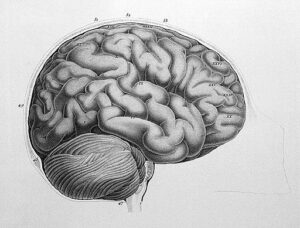
It is crucial that you understand that the physical movement is not the Qigong. It is the Internal movement that makes it Qigong. You cannot ignore the work with the body and let it become sloppy otherwise the work with the Yi, using it to guide the Qi, will be totally inefficient.
Concentration is about intention, sustained intention to be 100% here and now – not to have thoughts scattered through time and space. The Tao of the Mind has one simple rule – be focused.
The Tao of Qigong requires the Tao of Spirit
Spirit / Shen refers to the consciousness and not the religious concept of soul.
In this, the third stage, we have gone from learning, travelled through doing and are now being Qigong.
When using the Shen to listen to the Qi we are going beyond guiding. We are paying attention to what effect our guidance has had on the Qi. Without the listening we have no comprehension of whether our Qigong is working. I like to use the analogy of driving a car……………. The Yi is in control of the car but it is the Shen that has the awareness of the other traffic, pedestrians, etc.
Herein lies the problem. The Yi does not like to cede control to the Shen. It puts up a fight for control as it is frightened of not being in control. To attain the Tao of Spirit we must comfort the Yi and allay its fears.
The practice of the Tao of Spirit is to allow this, tangible, experience of Qi to deepen so that we can appreciate that our whole being is immersed in it and we can absorb it. This is developing experiential wisdom, not learning from a book.
Like the Tao (“the Tao that can be described is not the true Tao”), Spirit (Shen) cannot be truly described, because words can only compare what is happening with a pre-existing experience. Our life’s experience is of the physical world so our Qi experiences can never conveyed adequately because we do not have the language.
The Tao of Spirit is about developing Shen. Have the inquisitiveness and open mind of a child and you will experience more. The closed mind and the pre-determined anticipation of the world-weary adult closes one door after another. Do not anticipate. Do not expect the same results every time you perform Qigong. The Qigong may be the same each time you practice……….. but you are not.
The Tao of Spirit is about healing the split between the Yi (ego led) and the Shen (the Higher Self, consciousness, etc.), between the form and the formless. The Yi does not like to yield control to the Shen but with patience and practice it can be persuaded.
Qigong gives us the wonderful gift of being able to step into the eye of the hurricane born of our ego. We can utilise the principles of Qigong to harmonise the San Bao, even if only briefly, and step into a place of beauty where we can re-evaluate our lives and view our problems and hang-ups from an entirely different perspective.
A friend once told me that he was going to Kathmandu to “find myself”. I asked when he was last there, “Never.” was his reply. His search was not in Kathmandu, how could he have possibly lost himself there having never visited the place. It was within himself that he had to search. Our place of refuge, of beauty, is with us all the time; it is here within us and can be accessed through this wonderful thing called Qigong.
The Tao of Daily Life
Once this awareness has been mastered during practice, the experience is naturally transferred to our daily life. Qigong becomes part of our daily life as our daily life becomes part of Qigong. The circle is complete; you have regained the essence of childhood, the essence that is you. Life is once more enjoying all that you do.
At some level, these qualities/principles are present all of the time. It would be impossible to practice Qigong without concentration and focus. You could not possibly experience the joy of the movement without, at some level, healing even for an instant, the rift between Body, Mind and Spirit.
Having to adhere to what initially appears as a bewildering array of principles, which must be practised simultaneously, can be very off putting. But as you can hopefully now see, these are broken down and introduced gradually so that they work harmoniously and synchronistically.
You will at some juncture start using the principles of listening with the physical movement, so that awareness of the beginning and end of each posture is apparent. Use this to listen to your body as you work through the particular Qigong that you are learning, keeping focus throughout.
As you practice working with the Shen, you are really finding deeper/higher levels of your being and you will start to notice the subtle changes that are occurring in you.
Qigong as an art is an ongoing development of the artist, but the practice of Qigong can start straight away. All you need is a mind that is open, flexible and mobile. A body that is flexible and mobile is not nearly as important. Passive Qigong moves the Qi and is equally aware of that movement without the need for physical input.
There is of course great benefit in practicing Qigong as far as health and relaxation is concerned, but it does not need to stop there. As your art progresses you can work deeper with Mind and Spirit, so that eventually we have clarity and balance of the San Bao.
After playing Qigong for a while, when the body has started to be as one unit, we are able to focus our co-ordination and intent with more efficiency. When the body/mind are as one, then the qualities of wisdom will have been absorbed and assimilated throughout our being through practice and understanding. This will affect our lives and we will remember the dislocated body/mind we started with at the beginning of our Qigong adventure and we will be able to enjoy our newly found balance.
If you practice faithfully to yourself, with the joy that the inner smile brings, you will definitely follow this path with success. You may find times when it appears meaningless, but you will also find times when it is extremely profound. Keep at it, it is your journey, your adventure…finding the balance of determination and compassion. There will be obstacles and mistakes – go with it, go with the flow, these challenges are lessons that will lead to greater understanding. You are responsible for your practice, find a good Qigong teacher who will work through the principles and Qigong sets with you. Do not look for a Guru expecting to be guided along the Path, be your own, find yourself, awaken the hidden you….This is your Tao. A teacher can only point a finger at the moon, it is your task to reach for it.
Finally, have a wondrous adventure. Find love, compassion, time for yourself, and then you will have these for all.