
Seasonal Qigong using the Five Elements (Qualities) of Qi
As humans, living on a planet that is in constant flux, we are affected by the changes in our environment. These changes may be global, or local, and they can have a profound impact on our health and wellbeing. One of these changes, the changing of the seasons, is cyclic and we are all aware of how our mood and our energy. From how we feel in the Spring as the days lengthen and the sap rises to how we feel as Winter deepens with its short days and long periods of darkness.
One way of tracking and describing these changes was developed by the Chinese sages of ancient times. It is an almost poetic way of describing the constantly changing Tao the also applies to the seasons, to health, to spirituality, actually to everything. This is the Five Element Theory and it covers everything from Meridian pairs to the time of year.
The Five Elements theory is applied to the physiology and pathology of the human body by recognising and utilising the interdependent relationships to produce clinical diagnosis and provide treatment plans.
When the Five Element theory is used to describe the various correlations between the energetic systems of the meridians and the physical/emotional body, the following is observed:
In the Sheng (Nurturing) cycle it can be seen that: –
- Lung Qi (represented by Metal) is involved in clearing and descending functions that assist the flowing of kidney water.
- Kidney Qi (represented by Water) nourishes the liver.
- Liver Qi (represented by Wood) stores the blood in its supporting role to the heart.
- Heart Qi (represented by Fire) warms the spleen.
- Spleen Qi (represented by Earth) transforms and transports the essential nutrients to replenish the lungs.
In the Ko (Control) cycle it seen that: –
- The clearing and descending functions of Lung can be used to curtail the hyperactivity of Liver yang.
- The freely flowing Liver Qi is capable of clearing stagnation of Spleen.
- The transporting and transforming function of Spleen is capable of subduing the overflowing of Kidney.
- The cool and moistening function of Kidney can be used to dampen any flaring up of Heart Qi.
- The heat of Heart Qi can be used to restrict the condensing, clearing and descending functions of Lung Qi.
The Five Elements theory is also used to express the relationships that exist between the human body and the climate, seasons, time of day, flavours, etc.
The Yin – Yang theory and Five Elements theory are representative of the beliefs and methodology of the ancient Chinese sages, explaining their understanding and explanation of nature. The application of these two theories to Chinese medicine consists of observing the phenomena and laws of nature and applying them to the study of the physiological activities and pathological changes within the human body.
The theory of Yin – Yang explains the dynamics of physical objects through a consideration of their opposite, interdependent, and transforming relationships. Normal human physiological activities are understood as the relative balance and harmonisation between Yin and Yang. When Yin and Yang lose their relative balance and harmony, disease occurs. The theories of Yin – Yang and the Five Elements are used together as a guide to clinical diagnosis and treatment (Choosing the appropriate Qigong).
It is impossible to describe something as being either Yin, or Yang without comparing it to something else. Each is relative to the other and cannot be viewed, or understood, separately. This is where the Five Elements come in to play. If you imagine the Taiji symbol (Yin / Yang Symbol) slowly rotating it is representing the change from one state to the other. Yin to Yang and then back to Yin. In order to be able to describe particular qualities, that rotation was split into five segments.
These segments were then named and there qualities mapped out. Among those qualities was the season when that Element was most active, or most needed. During the prolonged process of experiencing these qualities it became evident that Fire had four distinct meridians: Heart, Small Intestine, Heart Governor and Triple Warmer. This led to the distinction between Summer and High Summer, effectively giving us six seasons.
The Seasons
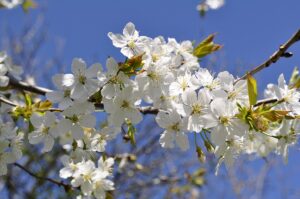
Seasonal Qigong – Spring
Wood Qi: Liver and Gallbladder meridians. Wood Qi travels up and out (Growing and creative). Its qualities are: Flexibility, activity, extroversion, determination, inventiveness, capable of inspiring, enthusiastic, self confidence, and being competitive.

Seasonal Qigong – Summer
Primary Fire: Heart and Small Intestine meridians Heart Governor and Triple Warmer meridians. Lively, communicative, charismatic, optimistic, sanguine, tender, empathetic, devoted, enthusiastic, spiritual, and alert.

Seasonal Qigong – Late Summer
Spleen and Stomach meridians. Thoughtful, intellectual, nurturing, empathetic, motherly, down to earth, well grounded and balanced, attentive, and relaxed.
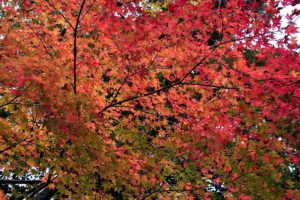
Seasonal Qigong – Autumn
Lung and Large Intestine meridians. Can be detached, unflappable, structured, calm, neat, precise, accepting, an able to integrate new influences.

Seasonal Qigong – Winter
Kidney and Bladder meridians. Forward moving, flowing and fluid, adaptable, can be in introverted and insular, deep thinking, and can be cold (emotionally).
The recommended Exercises
Occasionally, it is not simply a case of doing a Qigong that is for the meridian, or meridians, associated with the particular season. This can be because those, or one of those, meridians is already excessive and the Qi is “stuck”. In these cases making use of the Ko Cycle would be appropriate. Keeping it simple, I will assume that the Qi is reasonably balanced and that it is just a case of working with a Qigong to suit the Season.
Practice of these Qigong should commence at the beginning of, or slightly before, the start of the season.
Seasonal Qigong – Spring
At this time of year, Wood Qi is very active and invigorating. The impetus created by the rising Yang Qi can feel like a glorious sun rise. You can start to feel more awake, energetic and bright. This movement of the Qi and its effects on both body and psyche starts off slowly but slowly accelerates.
Recommended Qigong are: Liver, from the Five Taoist Yin, Painting Rainbows, from the Taiji Shibashi, and Holding the Fists Tightly and Staring with Glaring Eyes, from the Ten Fundamental Treasures.
Seasonal Qigong – Summer
This is a vey outgoing and adventurous time. At this time, our Shen (spirit) is lifted and our awareness and inquisitiveness grows. It is the time for enhancing the connection between the heaven and earth spiritually, emotionally and energetically.
Recommended Qigong are: White Crane, from the Embroidered Brocade, Circle the Arms to Part the Clouds, from the Taiji Shibashi, both of the Fire exercises (Primary Fire and Secondary Fire) from the Five Taoist Yin.
Seasonal Qigong – Late Summer
Recommended Qigong are: Spleen, from the Five Taoist Yin (You need to understand this Qigong before you can use the Earth Hand Posture effectively). Twisting the Waist and Pushing the Palms, from the Taiji Shibashi. Holding up a Single Hand, from the Ba Duan Jin.
Seasonal Qigong – Autumn
Things are starting to slow down and it is time to let go of anything that will drain our energy before we enter Winter. This can be any negative habits, or influences whether they are spiritual, emotional, or physical. That is the job of Large Intestine meridian. Simultaneously, Lung meridian is gathering Qi for storage so that it is there, if needed, during Winter.
Recommended Qigong are: Broadening the Chest, from the Taiji Shibashi. Lung, from the Five Taoist Yin. The Wise Owl Looks Backward, from the Ba Duan Jin (or from Set 3 of the Silk Exercises).
Seasonal Qigong – Winter
The Water phase of the Five Elements is the time of greatest Yin. The energy of nature is contracting and being concentrated in the Extraordinary Meridians and the bone marrow (Like sap returning to the roots of the tree). It is during this deep and contemplative period when we can explore Internally.
Recommended Qigong are: Kidney, from the Five Taoist Yin. The Commencement, from the Taiji Shibashi. Holding the Toes, from the Ba Duan Jin (or from the Ten Fundamental Treasures).